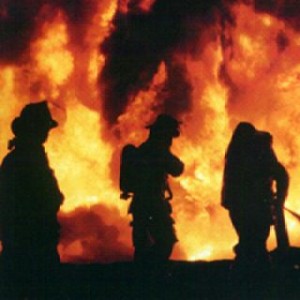
In City of St. Marys v. Fire Fighters Local 3633, the Ohio Court of Appeals vacated an arbitrator’s award which had reinstated an asthmatic firefighter. The arbitrator had found that the party’s fitness testing language had not been complied with but the Court determined that the arbitrator exceeded his authority in reaching that result.
In Laborers Local 236 v. Walker, the Seventh Circuit denied the Union’s challenges that Wisconsin’s Act 10 (1), the controversial amendment to the Wisconsin collective bargaining law. The Union had alleged that the amendments infringed upon their First Amendment petition and association rights and (2) denies Union members the equal protection of the laws ensured by the Fourteenth Amendment.
For those of our readers who would like a deeper understanding of the context and background of collective-bargaining rights, especially those public sector and public-safety employees, Toledo Law Professor Joseph Slater has published a very readable and condensed history of United States public-sector collective bargaining law. While Slater's article is entitled "The Strangely Unsettled State of Public-Sector Labor in the past 30 Years," he actually takes events back, nearly 100 years ago to the Boston Police Strike of 1919. His focus on the 30-years, marks the departure point for which he believes public-sector collective-bargaining rights issues became more partisan and less stable.
In Part One of this two-part series, we identified the growing problems associated with the Internet and its connected social media. Chiefly, we identified the problem associated with the new opportunities presented to public safety employees to be "stupid" in what they say or do on a much grander and more public scale. As we discussed, previous discipline cases addressed how to discipline officers and firefighters for misplaced communications to a narrow audience, such as the gathering of coworkers off-duty at the neighborhood bar. Now the Internet allows employees to event to the world.
The Bureau of Labor Statistics (BLS) reports nationwide unionization rates dropped markedly in 2012, dropping from 11.8% in 2011, to 11.3%. BLS also reported that public sector unionization stood at 35.9%, while private sector unionization was at 6.6%. These numbers in 2011, stood at 37.0 % and 6.9%, respectively. In the 1950s, private sector unionization stood at about 35%.
In Central State University, 130 LA 1351 (Bell, 2012), Arbitrator Langdon Bell was precluded from awarding monetary damages against Central State University for a violation of their collective-bargaining agreement (“CBA”) with their security officers because the union did file a written request for a specific remedy. Thus, although a violation with associated monetary damages was properly alleged, the Arbitrator could only direct the University to adhere to the CBA staffing guidelines in the future.
The City of Denver was recently thwarted in its attempt to unilaterally implement a new disciplinary system on firefighters. In Denver Fire Fighters, Local 858 v. City & County of Denver, the Colorado Court of Appeals upheld the firefighters union’s claims that a “discipline matrix” - which defined penalties for rule violations - is a mandatory subject of bargaining.
In a precedent setting case, Alaska has become one of the first states to formally recognize the legal privilege between a union and its members. In Peterson v. State of Alaska (2012), the Alaska Supreme Court has held that the communications between a represented employee and his union were privileged and inadmissible in court.